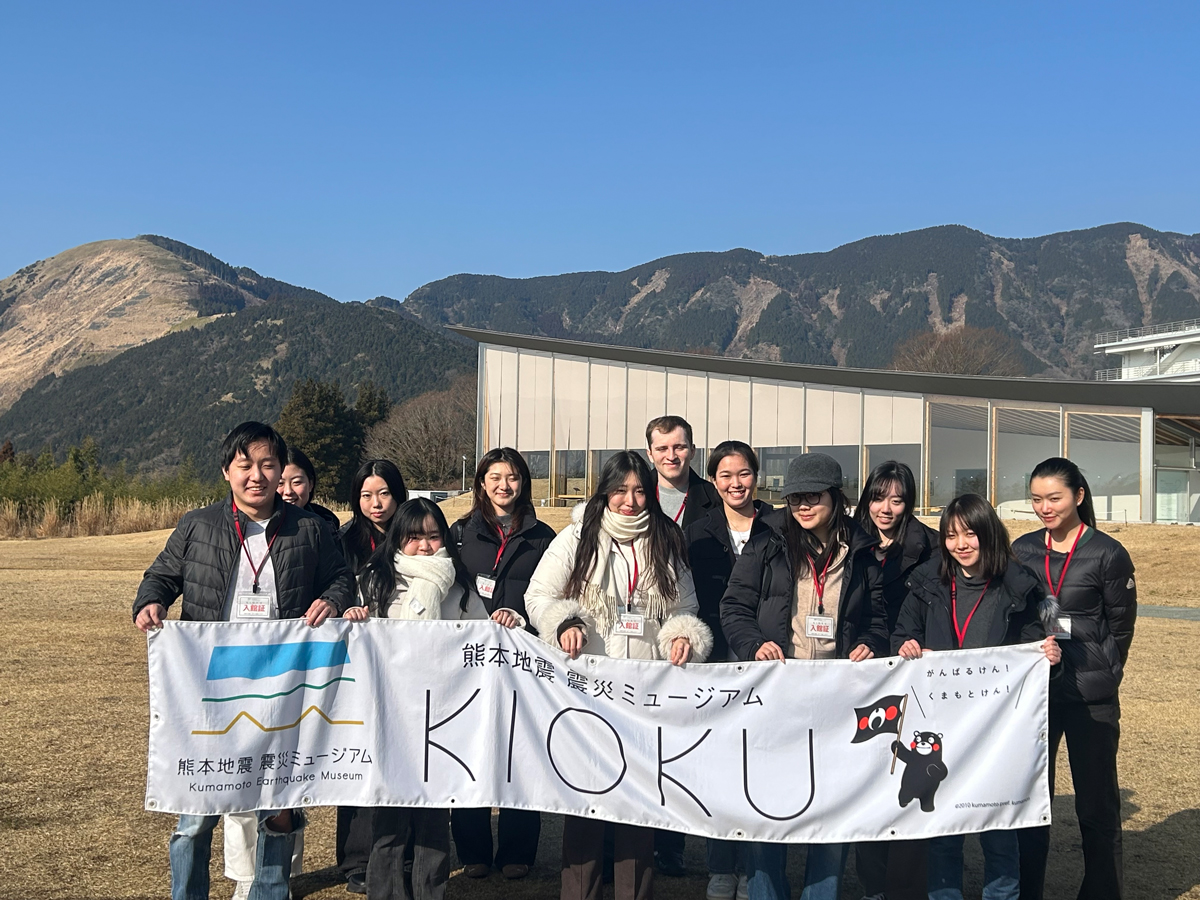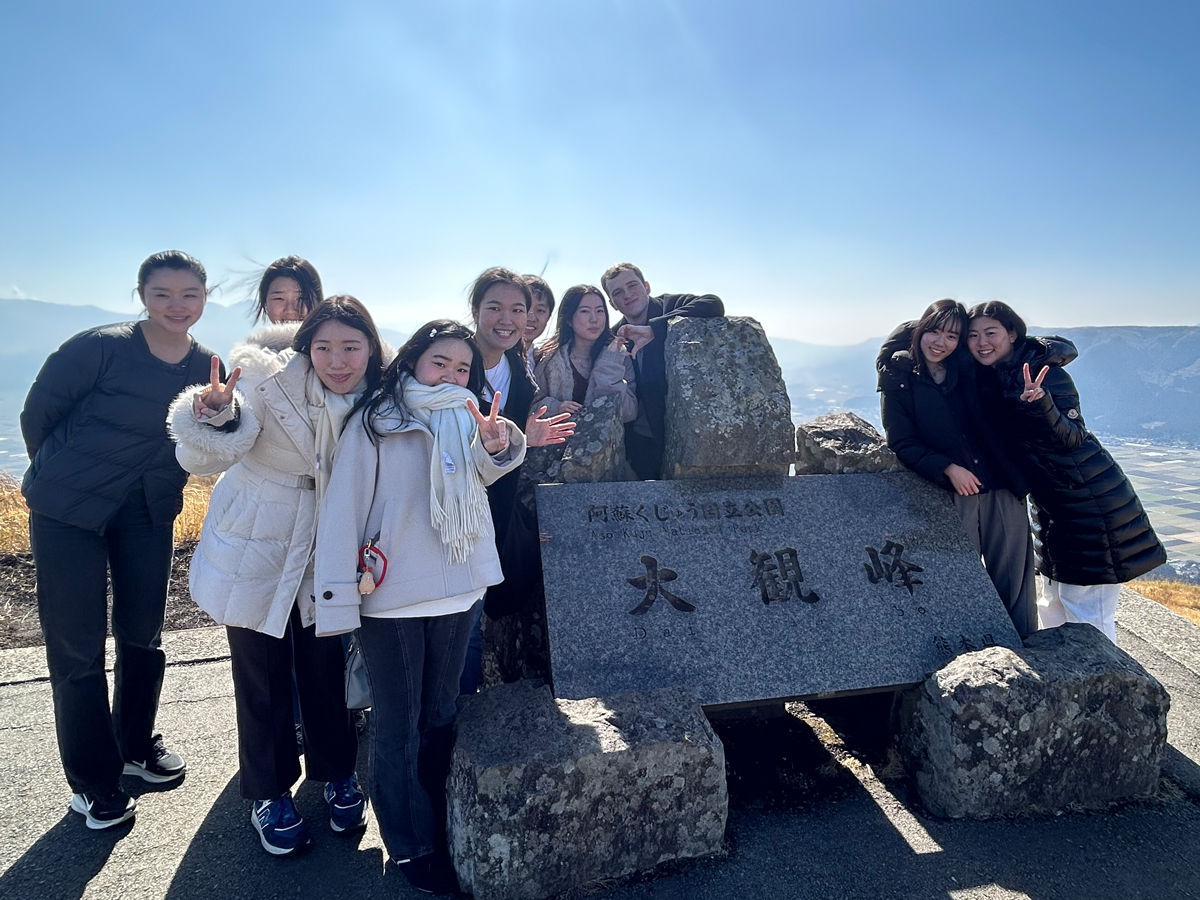
GLFP 12th Cohort visited Kumamoto.
Mar. 02, 2026
From February 10 to 13, 2026, 13 students from the 12th GLFP cohort, accompanied by faculty members, took part in a four-day, three-night field trip to Kumamoto City and Minamiaso Village.
Focused on the themes of "multicultural coexistence" and "disaster prevention," the program provided experiential learning opportunities regarding local initiatives—perspectives and practices that cannot be fully understood from Tokyo. Through this trip, students gained firsthand insight into how regional communities address these critical issues.
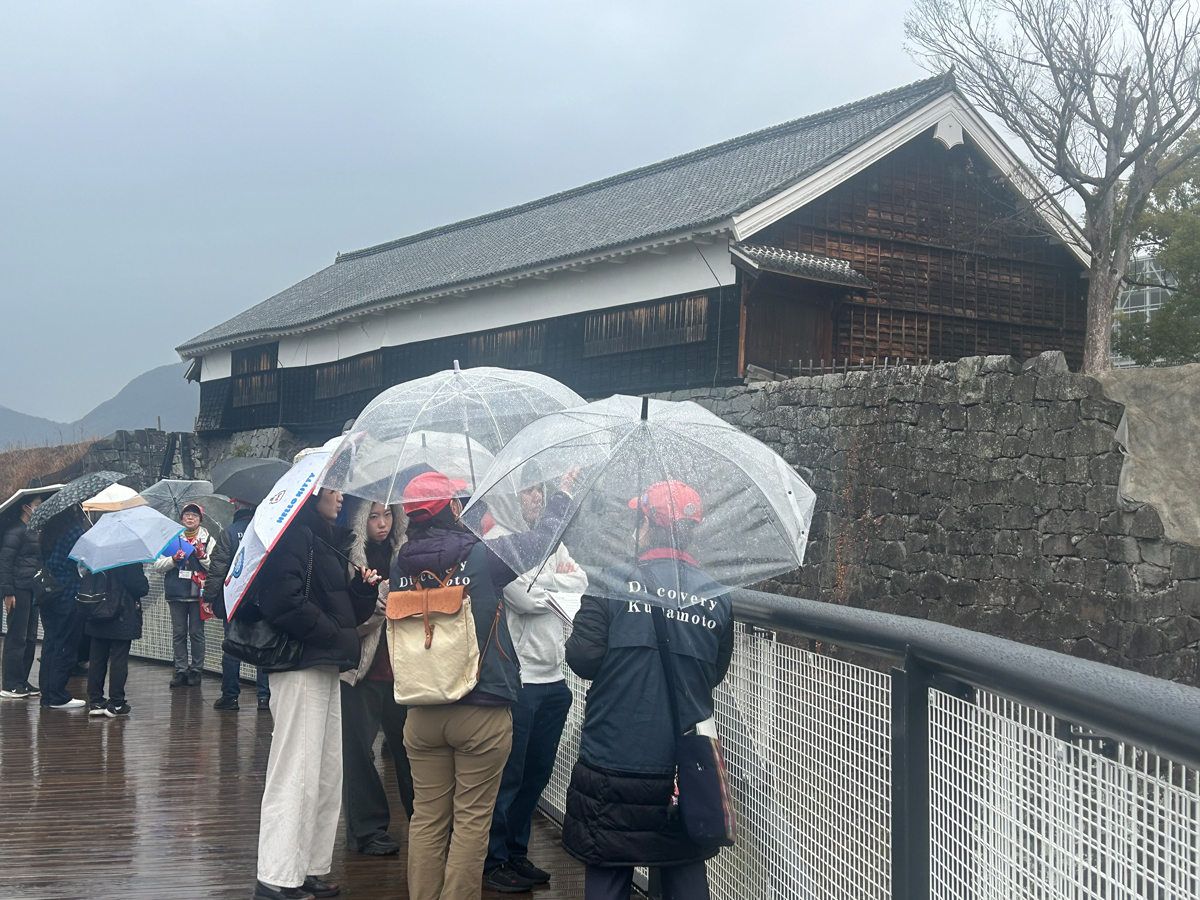
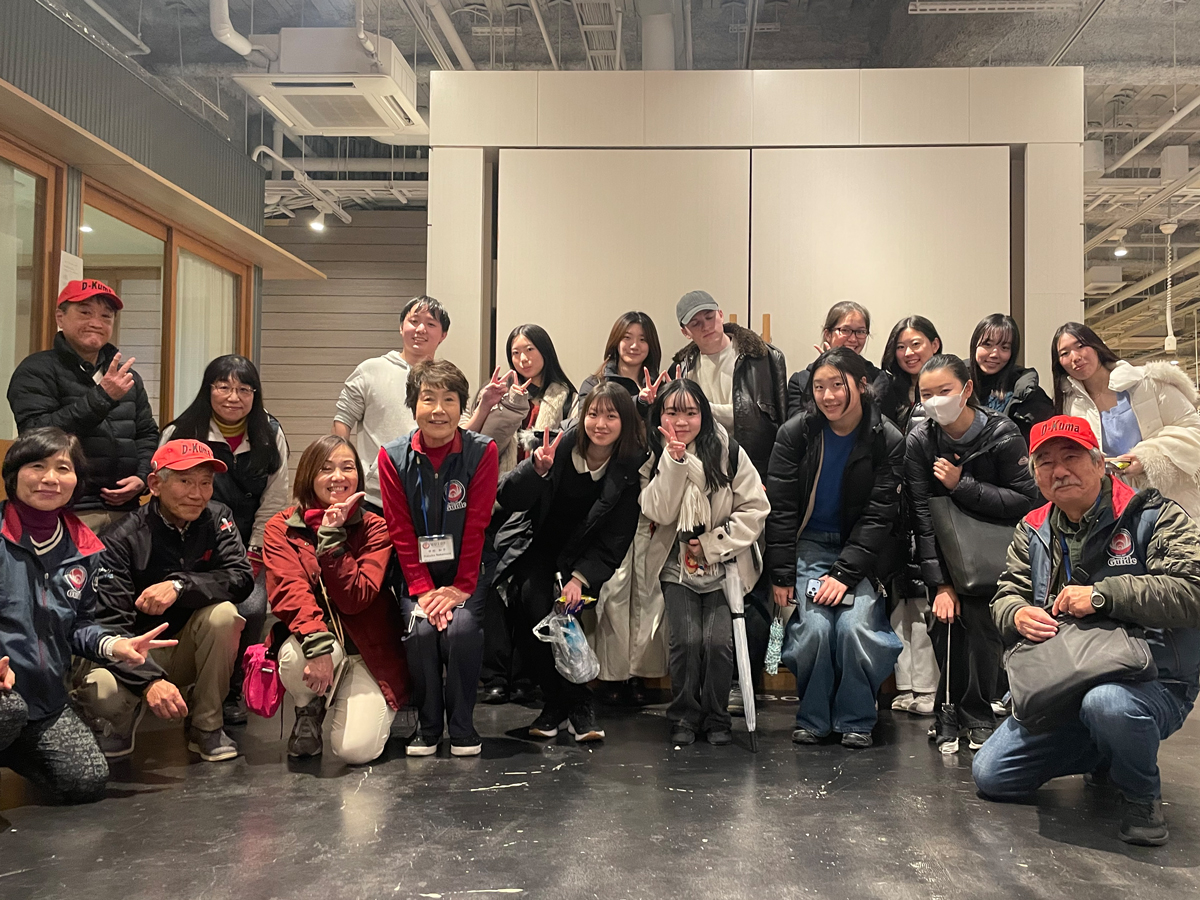
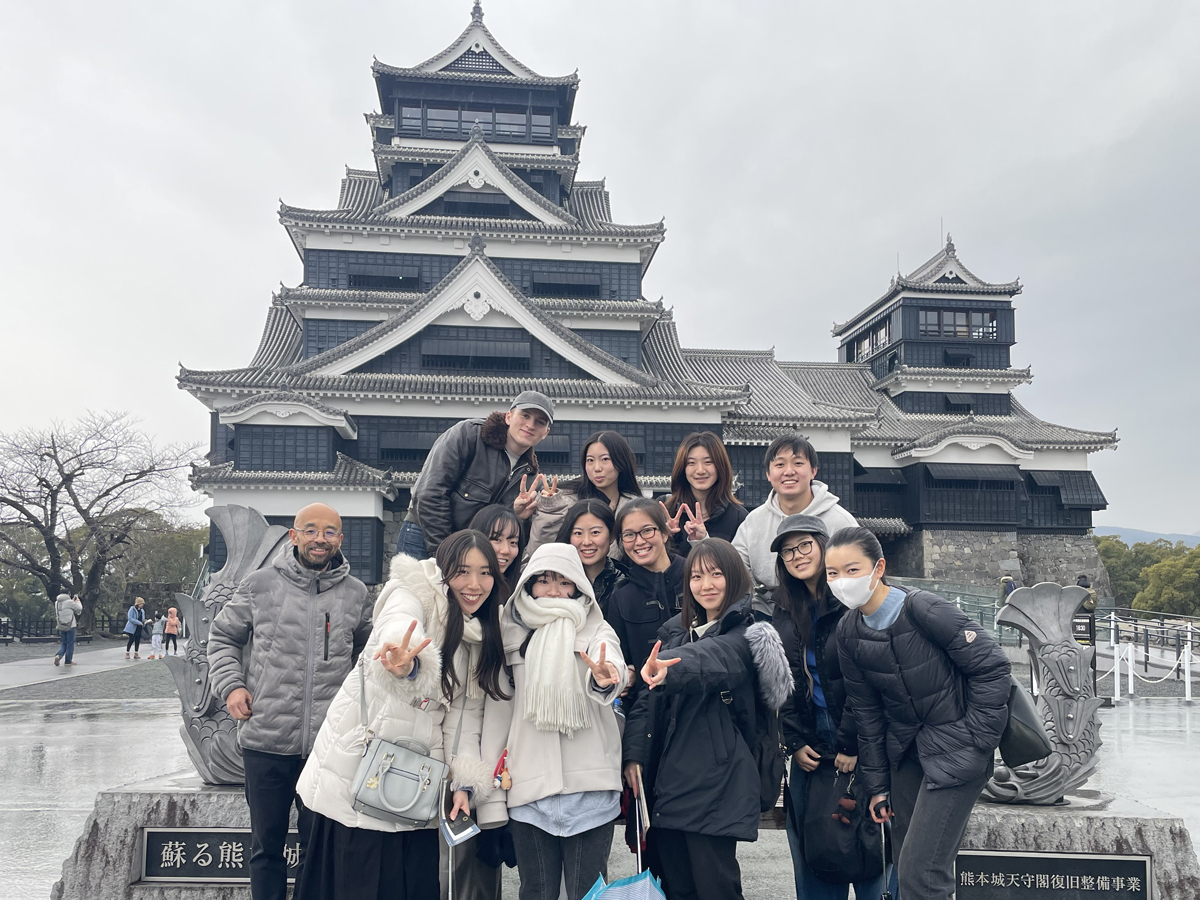
On the first day, we arrived in Kumamoto from Haneda Airport as scheduled. After heading to the city center, we visited Kumamoto Castle under the guidance of local guides.
This year marks the 10th anniversary of the April 2016 Kumamoto Earthquake. While restoration is steadily progressing, the students received an English-language tour covering the castle's history and the ongoing recovery efforts expected to span several decades. Following the tour, they shared their reflections and insights with one another.
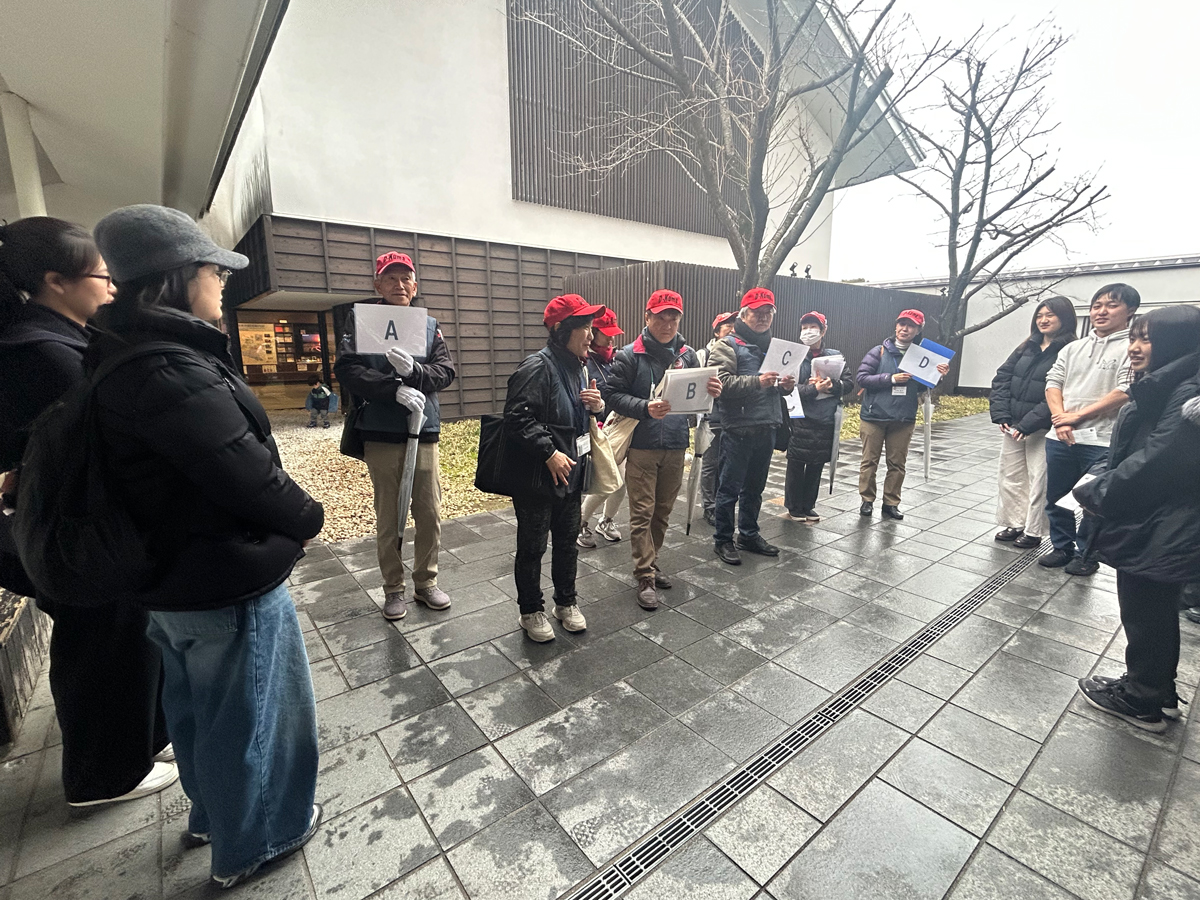
On the second day, we spent the entire day at a facility in Kumamoto City.
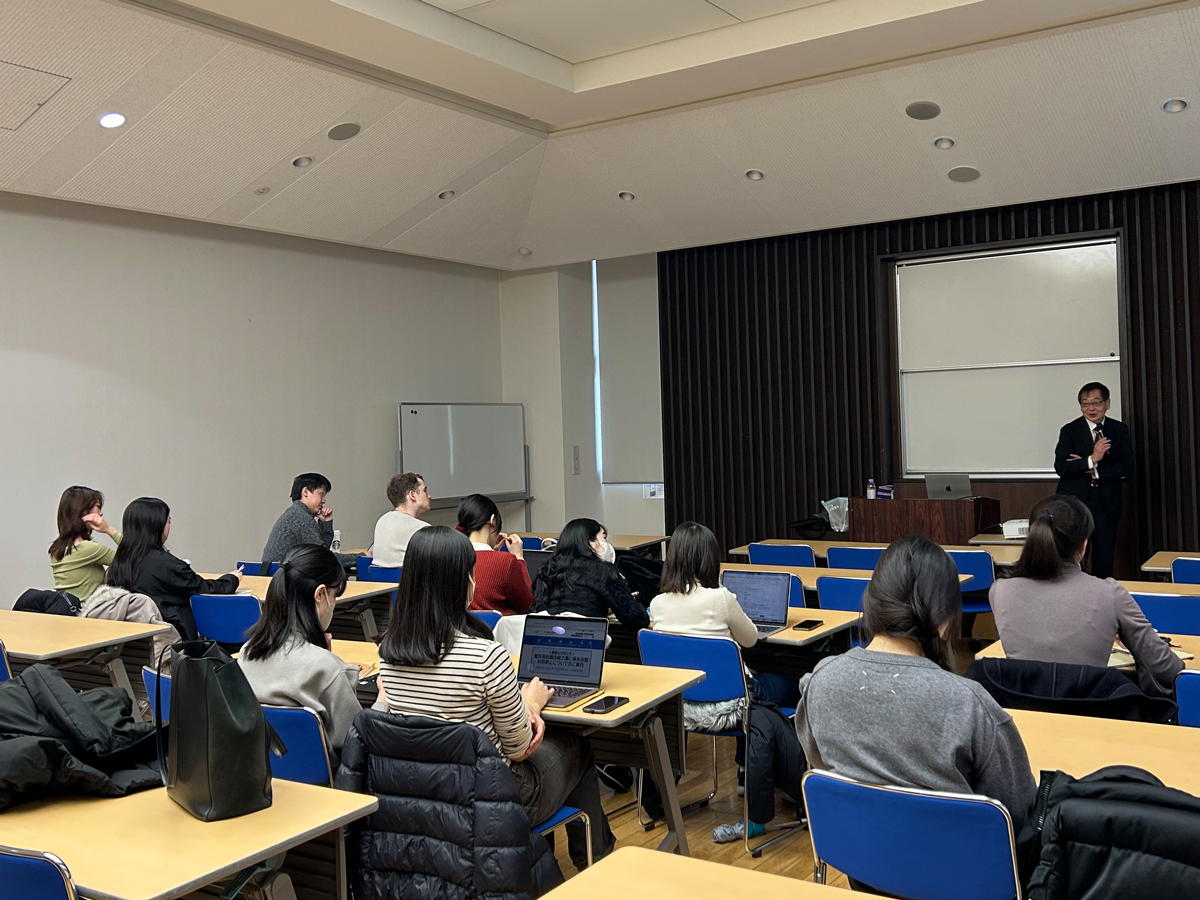
In the morning, the students attended a lecture delivered by Mr. Yagi, Executive Director of the Kumamoto International Foundation, on Japan’s multicultural coexistence policies and an overview of the 2016 Kumamoto Earthquake.
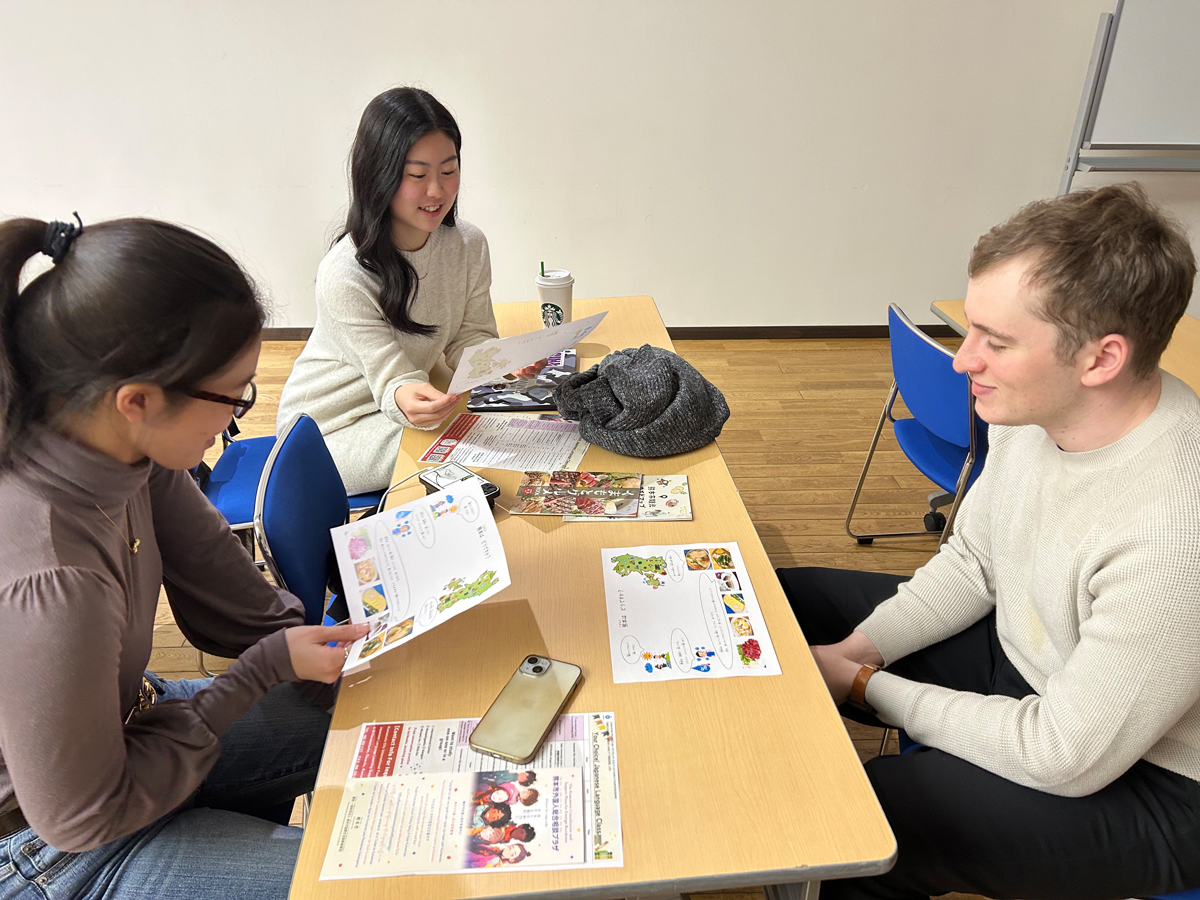
Following the lecture, they had the opportunity to participate in the activities of the Japanese language class “Kurashi no Nihongo Club,” which is regularly organized for foreign residents living in Kumamoto City.
In the afternoon, we welcomed three foreign residents who have been living in Kumamoto since the time of the earthquake— a faculty member of Kumamoto University and members of the Kumamoto Islamic Center — as guest speakers.
They spoke about the various challenges they faced at the time of the earthquake while living in Kumamoto as international students, as well as their efforts to establish a disaster prevention group based on those experiences and the activities they have since undertaken. They also shared insights into how foreign residents, as a minority community, strive to coexist with Japanese society while navigating differences in language, culture, and religion.
Following the lecture, the participants engaged in group discussions with the guest speakers, exchanging ideas actively and reflecting on the topics addressed.
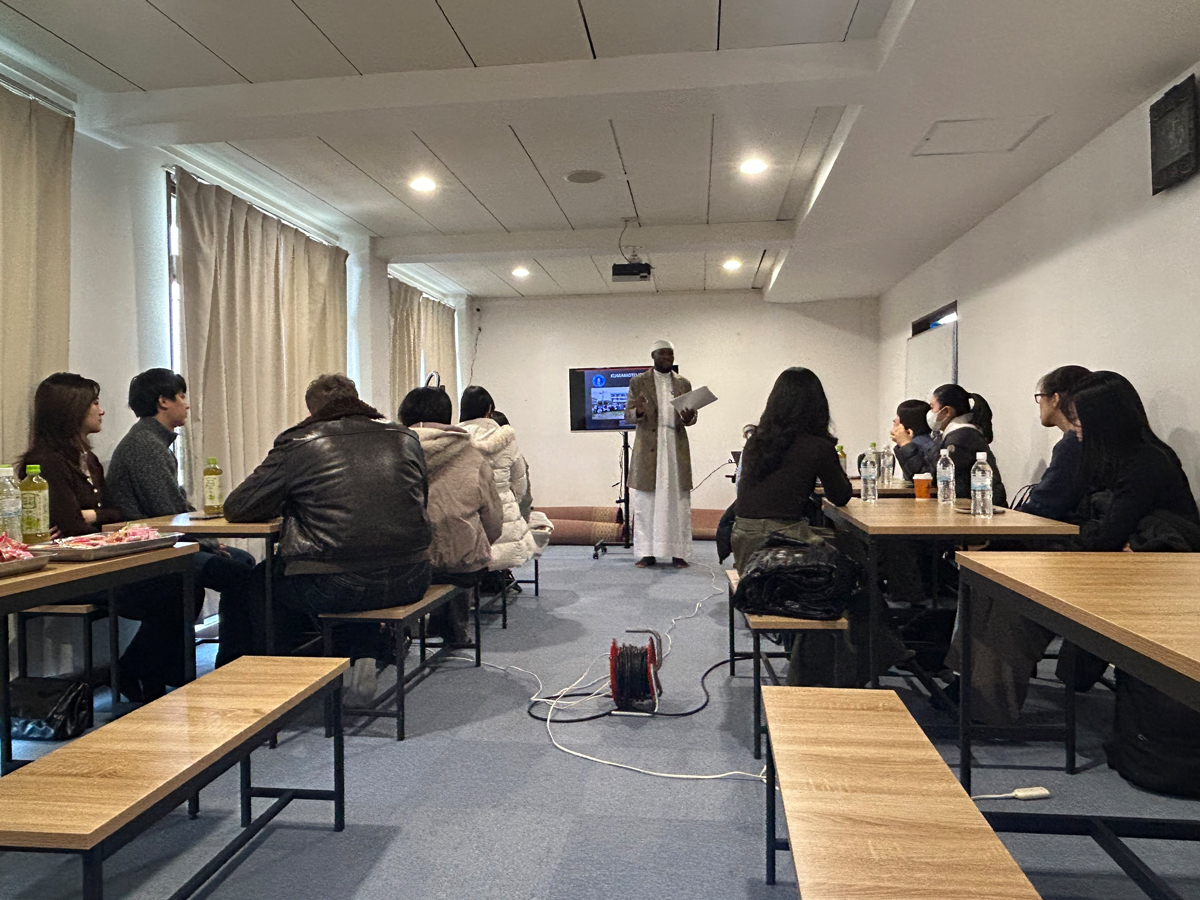
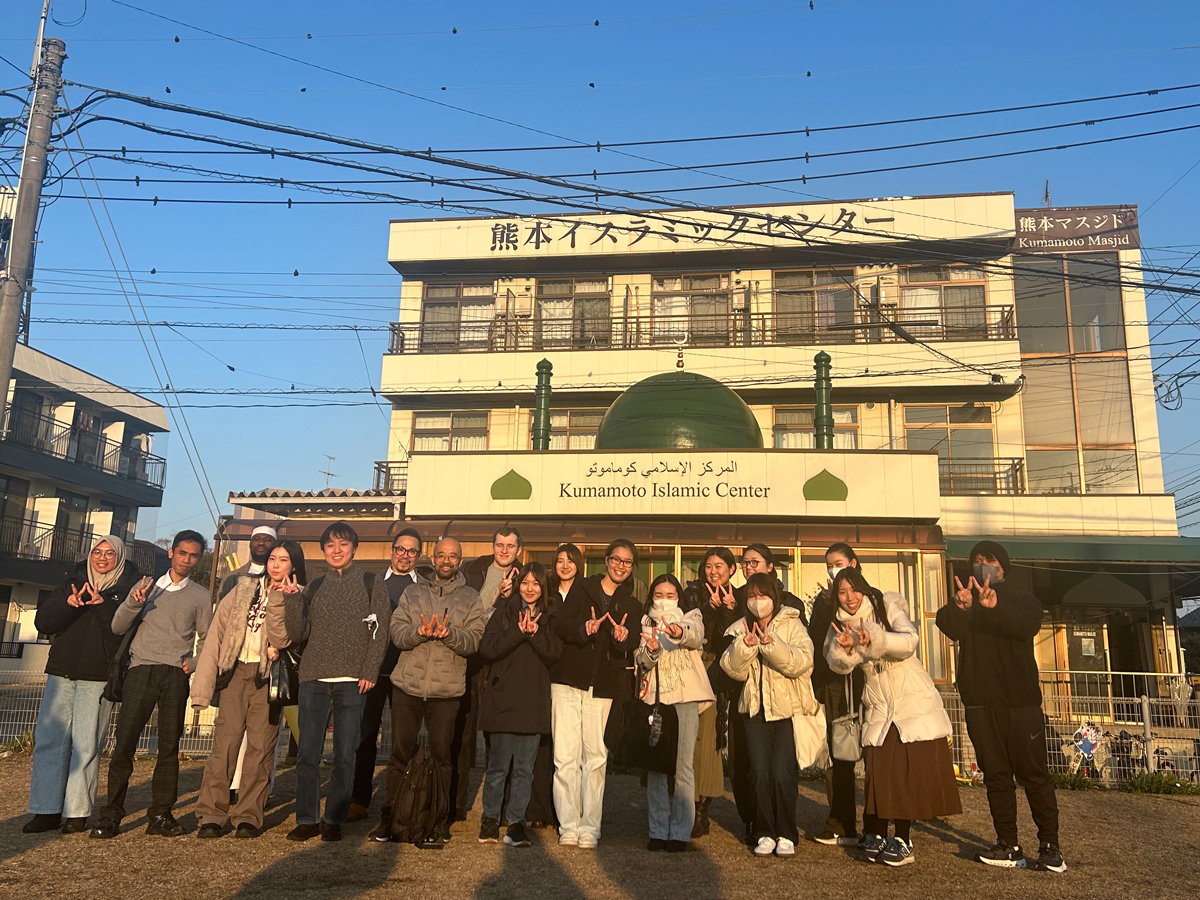
On the third day, we visited the Kumamoto Islamic Center. We first received an introduction to Islam from the Imam, who explained the basic beliefs and practices of the religion. We then heard from members of the Center — including one of the speakers from the previous day — about the Center’s role in Kumamoto City, its engagement with the local community during the Kumamoto earthquake, and the challenges Muslims sometimes face living in Japan. They shared concrete examples from their own experiences, which gave students a deeper understanding of life as a religious minority in Japan. During one of the five daily prayer times, we were invited to observe the prayers inside the mosque. Many students asked thoughtful questions about the meaning and customs of the prayer rituals, making it a valuable opportunity for cross-cultural learning.
In the afternoon, three Muslim students currently studying at Kumamoto University joined the program.
Each student spoke about their reasons for studying in Japan, their future goals, and their experiences living in Japan as Muslims, including the differences they have noticed compared to their home countries. After their presentations, they took part in small-group discussions with the GLFP students.
Bringing together people of different ages, genders, nationalities, and religious backgrounds, the session provided a meaningful opportunity for open dialogue. Through the exchange of diverse perspectives, they were able to broaden their views and deepen their understanding of one another.
On the final (fourth) day, we visited the Kumamoto Earthquake Disaster Museum in Minami-Aso Village in the morning before returning to Tokyo in the afternoon.
Over the four days, the program offered the students a meaningful opportunity to reconsider multicultural coexistence from perspectives beyond those gained in daily life in Tokyo. It also helped expand the global outlook and competencies essential for active engagement in today’s global society. In addition, they were able to appreciate Kumamoto’s natural beauty, the resilience demonstrated in its recovery process, and the kindness and approachability of its people, making the program a truly enriching experience.